Omnipaque (Iohexol) injection, solution
WARNING: RISKS WITH INADVERTENT INTRATHECAL ADMINISTRATION
FOR INTRAVENOUS USE ONLY. Inadvertent intrathecal administration may cause death, convulsions/seizures, cerebral hemorrhage, coma, paralysis, arachnoiditis, acute renal failure, cardiac arrest, rhabdomyolysis, hyperthermia, and brain edema [see Warnings and Precautions (5.1)] .
WARNING: RISKS WITH INADVERTANT INTRATHECAL ADMINISTRATION
See full prescribing information for complete boxed warning.
FOR INTRAVENOUS USE ONLY. Inadvertent intrathecal administration may cause death, convulsions/seizures, cerebral hemorrhage, coma, paralysis, arachnoiditis, acute renal failure, cardiac arrest, rhabdomyolysis, hyperthermia, and brain edema ( 5.1 ) .
RECENT MAJOR CHANGES
1 INDICATIONS AND USAGE
OMNIPAQUE Imaging Bulk Package is indicated for
- Computed tomographic (CT) imaging of the head and body by intravenous administration in:
- adults (300 and 350 mg iodine/mL)
- pediatric patients (300 mg iodine/mL)
For use only with an automated contrast injection system, contrast management system, or contrast media transfer set cleared for use with OMNIPAQUE Imaging Bulk Package.
OMNIPAQUE Imaging Bulk Package is a radiographic contrast agent indicated for intravenous computed tomographic (CT) imaging of the head and body in adult and pediatric patients. ( 2.1)
For use only with an automated contrast injection system, contrast management system, or contrast media transfer set cleared for use with OMNIPAQUE Imaging Bulk Package.
2 DOSAGE AND ADMINISTRATION
The concentration and volume required will depend on the equipment and imaging technique used. See full prescribing information for full dosing information. ( 2.2)
2.1 Important Administration Instructions
- OMNIPAQUE is for intravenous use only [see Boxed Warning, Contraindications (4), and Warnings and Precautions (5.1)]
- OMNIPAQUE may be administered at body (37°C) or room temperature. Do not warm the container beyond 37°C.
- Inspect OMNIPAQUE for particulate matter or discoloration before administration, whenever solution and container permit. Do not administer if OMNIPAQUE contains particulate matter or is discolored.
- Do not mix OMNIPAQUE with, or inject in intravenous lines containing, other drugs or total nutritional admixtures.
- Use sterile technique for all handling and administration of OMNIPAQUE.
- Hydrate patients before and after OMNIPAQUE administration [see Warnings and Precautions (5.3)].
- Avoid extravasation when injecting OMNIPAQUE, especially in patients with severe arterial or venous disease [see Warnings and Precautions (5.5)]
2.2 Recommended Dosage
- The dosing recommendations for OMNIPAQUE Imaging Bulk Package are summarized below for adult (Table 1) and pediatric (Table 2) patients.
- The maximum recommended total dose of iodine for adults is 60 grams.
- Use the lowest dose necessary to obtain adequate visualization.
- Individualize the volume, strength, and rate of administration of OMNIPAQUE Imaging Bulk Package. Consider factors such as age, body weight, vessel size, blood flow rate within the vessel, anticipated pathology, degree and extent of opacification required, structures or area to be examined, disease processes affecting the patient, and equipment and technique to be employed.
2.3 Imaging Bulk Package Preparation Instructions
- OMNIPAQUE Imaging Bulk Package is for use only with an automated contrast injection system, contrast management system, or contrast media transfer set cleared for use with this contrast agent in this Imaging Bulk Package. See device labeling for information on devices indicated for use with this Imaging Bulk Package and techniques to help assure safe use.
- Use OMNIPAQUE Imaging Bulk Package and 0.9% Sodium Chloride Injection only in a room designated for radiological procedures that involve intravascular administration of a contrast agent.
- Utilize sterile technique for penetrating the container closure of the OMNIPAQUE Imaging Bulk Package and transferring OMNIPAQUE solution. The container closure may be penetrated only one time with a suitable sterile component of the automated contrast injection system, contrast management system, or contrast media transfer set cleared for use with this Imaging Bulk Package. Do not use if tamper-evident ring is broken or missing.
- If 0.9% Sodium Chloride Injection USP is used, prepare the 0.9% Sodium Chloride Injection USP sterile port in accordance with the dosage and administration section of its approved prescribing information. The intravenous administration port of the 0.9% Sodium Chloride Injection USP container may be penetrated only one time with a suitable sterile component of the contrast management system approved for use with the OMNIPAQUE Imaging Bulk Package.
- Affix the saline tag provided with the OMNIPAQUE Imaging Bulk Package on the 0.9% Sodium Chloride Injection USP container.
- Once the OMNIPAQUE Imaging Bulk Package and 0.9% Sodium Chloride Injection are punctured do not remove them from the work area during the entire period of use. Maintain the OMNIPAQUE Imaging Bulk Package bottle in an inverted position such that container contents are in continuous contact with the dispensing set.
- After the container closure is punctured, if the integrity of the OMNIPAQUE Imaging Bulk Package, the 0.9% Sodium Chloride, and the delivery system cannot be assured through direct continuous supervision, discard the OMNIPAQUE Imaging Bulk Package, 0.9% Sodium Chloride, and all associated disposables for the iodinated contrast media transfer set.
- A maximum time of 8 hours from initial puncture is permitted to complete fluid transfer. Discard any unused OMNIPAQUE solution and 0.9% Sodium Chloride 8 hours after initial puncture of the OMNIPAQUE Imaging Bulk Package.
3 DOSAGE FORMS AND STRENGTHS
Injection: Non-ionic, sterile, pyrogen-free, colorless to pale yellow solution in an imaging bulk package in the following strengths:
- 300 mg of organically bound iodine per mL (647 mg of iohexol/mL)
- 350 mg of organically bound iodine per mL (755 mg of iohexol/mL)
Imaging Bulk Package is available in the following format: 500 mL polymer bottle ( PLUSPAK™)
Injection: 500 mL Imaging Bulk Package available in two strengths:
- 300 mg of iodine per mL (647 mg of iohexol/mL) and
- 350 mg of iodine per mL (755 mg of iohexol/mL) ( 3)
4 CONTRAINDICATIONS
None.
None
5 WARNINGS AND PRECAUTIONS
- For intravenous use only. ( 5.1)
- Hypersensitivity Reactions: Life-threatening or fatal reactions can occur. Always have emergency equipment and trained personnel available. ( 5.2)
- Contrast Induced Acute Kidney Injury: Acute injury including renal failure can occur. Minimize dose and maintain adequate hydration to minimize risk. ( 5.3)
- Cardiovascular Adverse Reactions: Hemodynamic disturbances including shock and cardiac arrest may occur during or after administration. ( 5.4)
- Thyroid Dysfunction in Pediatric Patients 0 to 3 Years of Age: Monitor these patients for thyroid function abnormalities and treat as clinically needed. ( 5.7)
5.1 Risks with Inadvertent Intrathecal Administration
OMNIPAQUE is for intravenous use only [see Dosage and Administration (2.1)]. Inadvertent Intrathecal administration can cause death, convulsions/seizures, cerebral hemorrhage, coma, paralysis, arachnoiditis, acute renal failure, cardiac arrest, rhabdomyolysis, hyperthermia, and brain edema.
5.2 Hypersensitivity Reactions
OMNIPAQUE, can cause life-threatening or fatal hypersensitivity reactions including anaphylaxis. Manifestations include respiratory arrest, laryngospasm, bronchospasm, angioedema, and shock. Most severe reactions develop shortly after the start of the injection (within 3 minutes), but reactions can occur up to hours later. There is an increased risk in patients with a history of a previous reaction to contrast agent, and known allergies (i.e., bronchial asthma, drug, or food allergies) or other hypersensitivities. Premedication with antihistamines or corticosteroids does not prevent serious life-threatening reactions, but may reduce both their incidence and severity.
Obtain a history of allergy, hypersensitivity, or hypersensitivity reactions to iodinated contrast agents and always have emergency resuscitation equipment and trained personnel available prior to OMNIPAQUE administration. Monitor all patients for hypersensitivity reactions.
5.3 Contrast-Induced Acute Kidney Injury
Acute kidney injury, including renal failure, may occur after OMNIPAQUE administration. Risk factors include: pre-existing renal impairment, dehydration, diabetes mellitus, congestive heart failure, advanced vascular disease, elderly age, concomitant use of nephrotoxic or diuretic medications, multiple myeloma/paraproteinaceous diseases, repetitive and/or large doses of an iodinated contrast agent.
Use the lowest necessary dose of OMNIPAQUE in patients with renal impairment. Adequately hydrate patients prior to and following OMNIPAQUE administration. Do not use laxatives, diuretics, or preparatory dehydration prior to OMNIPAQUE administration.
5.4 Cardiovascular Adverse Reactions
Life-threatening or fatal cardiovascular reactions including hypotension, shock, cardiac arrest have occurred with the use of OMNIPAQUE. Based upon clinical literature, reported deaths from the administration of iodinated contrast agents range from 6.6 per million (0.00066%) to 1 per 10,000 (0.01%). Most deaths occur during injection or 5 to 10 minutes later; the main feature being cardiac arrest with cardiovascular disease as the main aggravating factor.
OMNIPAQUE has the potential to transiently increase in the circulatory osmotic load in patients with congestive heart failure. Use the lowest necessary dose of OMNIPAQUE in patients with congestive heart failure and observe these patients for several hours following the procedure to detect delayed hemodynamic disturbances. Monitor all patients for severe cardiovascular reactions always have emergency resuscitation equipment and trained personnel available.
5.5 Extravasation and Injection Site Reactions
Extravasation of intravenously administered OMNIPAQUE may cause tissue necrosis and/or compartment syndrome, particularly in patients with severe arterial or venous disease. Ensure intravenous placement of catheters prior to injection. Monitor patients for extravasation and advise patients to seek medical care for progression of symptoms.
5.6 Thyroid Storm in Patients with Hyperthyroidism
Thyroid storm has occurred after the intravascular use of iodinated contrast agents in patients with hyperthyroidism, or with an autonomously functioning thyroid nodule. Evaluate the risk in such patients before use of OMNIPAQUE.
5.7 Thyroid Dysfunction in Pediatric Patients 0 to 3 Years of Age
Thyroid dysfunction characterized by hypothyroidism or transient thyroid suppression has been reported after both single exposure and multiple exposures to iodinated contrast media in pediatric patients 0 to 3 years of age.
Younger age, very low birth weight, prematurity, underlying medical conditions affecting thyroid function, admission to neonatal or pediatric intensive care units, and congenital cardiac conditions are associated with an increased risk of hypothyroidism after ICM exposure. Pediatric patients with congenital cardiac conditions may be at the greatest risk given that they often require high doses of contrast during invasive cardiac procedures.
An underactive thyroid during early life may be harmful for cognitive and neurological development and may require thyroid hormone replacement therapy. After exposure to iodinated contrast media, individualize thyroid function monitoring based on underlying risk factors, especially in term and preterm neonates.
5.8 Hypertensive Crisis in Patients with Pheochromocytoma
Hypertensive crisis has occurred after the use of iodinated contrast agents in patients with pheochromocytoma. Monitor patients when administering OMNIPAQUE if pheochromocytoma or catecholamine-secreting paragangliomas are suspected. Inject the minimum amount of contrast necessary, assess the blood pressure throughout the procedure, and have measures for treatment of a hypertensive crisis readily available.
5.9 Sickle Cell Crisis in Patients with Sickle Cell Disease
Iodinated contrast agents when administered intravascularly may promote sickling in individuals who are homozygous for sickle cell disease. Hydrate patients prior to and following OMNIPAQUE administration and use OMNIPAQUE only if the necessary imaging information cannot be obtained with alternative imaging modalities.
5.10 Severe Cutaneous Adverse Reactions
Severe cutaneous adverse reactions (SCAR) may develop from 1 hour to several weeks after intravascular contrast agent administration. These reactions include Stevens-Johnson syndrome and toxic epidermal necrolysis (SJS/TEN), acute generalized exanthematous pustulosis (AGEP) and drug reaction with eosinophilia and systemic symptoms (DRESS). Reaction severity may increase and time to onset may decrease with repeat administration of contrast agents; prophylactic medications may not prevent or mitigate severe cutaneous adverse reactions. Avoid administering OMNIPAQUE to patients with a history of a severe cutaneous adverse reaction to OMNIPAQUE.
6 ADVERSE REACTIONS
The following clinically significant adverse reactions are described elsewhere in the labeling:
- Risks Associated with Inadvertent Intrathecal Administration [see Warnings and Precautions (5.1)]
- Hypersensitivity Reactions [see Warnings and Precautions (5.2)]
- Contrast-Induced Kidney Injury [see Warnings and Precautions (5.3)]
- Cardiovascular Adverse Reactions [see Warnings and Precautions (5.4)]
- Thyroid Dysfunction in Pediatric Patients 0 to 3 Years of Age [see Warnings and Precautions 5.7]
- Severe Cutaneous Adverse Reactions [see Warnings and Precautions (5.10)]
Most common adverse reactions in adult patients:(incidence ≥ 1%) pain, vision abnormalities (including blurred vision and photomas), headache, taste perversion, arrhythmias including premature ventricular contractions (PVCs) and premature atrial contractions (PACs), angina/chest pain, nausea. ( 6.1)
To report SUSPECTED ADVERSE REACTIONS, contact GE Healthcare at 1-800-654-0118 or FDA at 1-800-FDA-1088 or www.fda.gov/medwatch.
6.1 Clinical Trials Experience
Because clinical trials are conducted under widely varying conditions, adverse reaction rates observed in the clinical trials of a drug cannot be directly compared to rates in the clinical trials of another drug and may not reflect the rates observed in practice.
Adults: The following Adverse Reactions are listed in decreasing frequency within each subgroup.
Cardiovascular System: arrhythmias including premature ventricular contractions (PVCs) and premature atrial contractions (PACs), angina/chest pain, hypotension, cardiac failure, asystole, bradycardia, tachycardia, and vasovagal reaction
Nervous System: pain, vision abnormalities (including blurred vision and photomas), headache, taste perversion, vertigo, dizziness, lightheadedness, anxiety, fever, motor and speech dysfunction, convulsion, paresthesia, somnolence, stiff neck, hemiparesis, syncope, shivering, transient ischemic attack, cerebral infarction, and nystagmus.
Respiratory System: dyspnea, rhinitis, coughing, and laryngitis
Gastrointestinal System: nausea, vomiting, diarrhea, dyspepsia, cramp, and dry mouth
Skin and Appendages: urticaria, purpura, abscess, and pruritus
Pediatric Patients:
In controlled clinical trials involving pediatric patients for CT head imaging, adverse reactions following the use of OMNIPAQUE (300 mg iodine/mL) were similar in quality and frequency to those seen with adults.
6.2 Post-Marketing Experience
The following additional reactions have been identified during post-approval intravascular use of OMNIPAQUE. Because these reactions are reported voluntarily from a population of uncertain size, it is not always possible to reliably estimate their frequency or establish a causal relationship to exposure.
Hemodynamic Reactions: vein cramp and thrombophlebitis following intravenous injection
Blood and Lymphatic System Disorders: neutropenia
Cardiovascular Disorders: cardiac arrest, shock, peripheral vasodilatation hypertension, myocardial infarction, spasm of coronary arteries, reflex tachycardia, cyanosis, pallor, flushing
Eye Disorders: transient visual impairment including cortical blindness, eyelid edema, conjunctival symptoms, lacrimation
Endocrine Reactions: hyperthyroidism, hypothyroidism
Gastrointestinal Disorders: abdominal pain, pancreatitis aggravated, salivary gland enlargement
General Disorders and Administration Site Conditions: chills, pyrexia, pain and discomfort, weakness, administration site conditions including extravasation, feeling hot
Immune System Disorders: hypersensitivity reactions, anaphylactic or anaphylactoid shock including life-threatening or fatal anaphylaxis
Musculoskeletal and Connective Tissue Disorders: back pain
Nervous System Disorders: coma, disturbance in consciousness, transient contrast-induced encephalopathy caused by extravasation of contrast media (including amnesia, hallucination, paralysis, paresis, speech disorder, aphasia, dysarthria), restlessness, tremors, hypoesthesia
Psychiatric Disorders: confusional state, agitation
Renal Disorders: acute kidney injury, nephropathy toxic, transient proteinuria, oliguria or anuria, increased serum creatinine
Respiratory; Thoracic, and Mediastinal Disorders: respiratory arrest, pulmonary or laryngeal edema, bronchospasm, sneezing, throat irritation, throat tightness, laryngeal edema, pharyngeal edema, asthmatic attack
Skin and Subcutaneous Tissue Disorders: Reactions range from mild (e.g. pleomorphic rashes, drug eruption, erythema, pruritus, urticaria and skin discoloration, hyperhidrosis, angioedema, localized areas of edema) to severe: [e.g., Stevens-Johnson syndrome and toxic epidermal necrolysis (SJS/TEN), acute generalized exanthematous pustulosis (AGEP) and drug reaction with eosinophilia and systemic symptoms (DRESS)]
7 DRUG INTERACTIONS
7.1 Drug-Drug Interactions
Metformin
In patients with renal impairment, metformin can cause lactic acidosis. Iodinated contrast agents appear to increase the risk of metformin-induced lactic acidosis, possibly as a result of worsening renal function. Stop metformin at the time of, or prior to, OMNIPAQUE administration in patients with an estimated Glomerular Filtration Rate (eGFR) between 30 and 60 mL/min/1.73 m 2; in patients with a history of hepatic impairment, alcoholism or heart failure; or in patients who will be administered intra-arterial iodinated contrast. Re-evaluate eGFR 48 hours after the imaging procedure, and reinstitute metformin only after renal function is stable.
Radioactive Iodine
Administration of iodinated contrast agents may interfere with thyroid uptake of radioactive iodine (I-131 and I-123) and decrease therapeutic and diagnostic efficacy in patients with carcinoma of the thyroid. The decrease in efficacy lasts for 6 to 8 weeks.
Beta-adrenergic Blocking Agents
The use of beta-adrenergic blocking agents lowers the threshold for and increases the severity of contrast reactions and reduces the responsiveness of treatment of hypersensitivity reactions with epinephrine. Because of the risk of hypersensitivity reactions, use caution when administering OMNIPAQUE to patients taking beta-blockers.
7.2 Drug-Laboratory Test Interactions
Effect on Thyroid Tests
If iodine-containing isotopes are to be administered for the diagnosis of thyroid disease, the iodine-binding capacity of thyroid tissue may be reduced for up to 2 weeks after contrast agent administration. Thyroid function tests which do not depend on iodine estimation, e.g., T 3 resin uptake or direct thyroxine assays, are not affected.
8 USE IN SPECIFIC POPULATIONS
Lactation: A lactating woman may pump and discard breast milk for 10 hours after OMNIPAQUE administration. ( 8.2)
8.1 Pregnancy
Risk Summary
Postmarketing data with OMNIPAQUE use in pregnant women are insufficient to determine if there is a drug-associated risk of adverse developmental outcomes. Iohexol crosses the placenta and reaches fetal tissues in small amounts (see Data). In animal reproduction studies, no adverse developmental effects were observed following intravenous iohexol administration to pregnant rats and rabbits during organogenesis at doses up to 0.4 (rat) and 0.5 (rabbit) times the maximum recommended human intravenous dose ( see Data ).
The estimated background risk of major birth defects and miscarriage for the indicated population is unknown. All pregnancies have a background risk of birth defects, loss or other adverse outcomes. In the U.S. general population, the estimated background risk of major birth defects and miscarriage in clinically recognized pregnancies is 2 to 4% and 15 to 20%, respectively.
Data
Human Data
Literature reports show that iohexol crosses the placenta and is visualized in the digestive tract of exposed infants after birth.
Animal Data
Reproduction studies were performed in rats and rabbits with intravenous administration of iohexol at the following dose levels: 1.0, 2.0, 4.0 g iodine/kg in rats, in 3 groups of 25 dams once daily during days 6 through 15 of pregnancy; 0.3, 1.0, 2.5 g iodine/kg in rabbits, in 3 groups of 18 doses once a day during days 6 through 18 of pregnancy. Iohexol was not embryotoxic or teratogenic in either species at the dose levels tested.
8.2 Lactation
Risk Summary
The literature reports that breast feeding after iohexol administration to the mother would result in the infant receiving an oral dose of approximately 0.7% of the maternal intravenous dose. There is no information on the effects of the drug on milk production. Iodinated contrast agents are excreted unchanged in human milk in very low amounts with poor absorption from the gastrointestinal tract of a breastfed infant. Exposure to iohexol to a breastfed infant can be minimized by temporary discontinuation of breastfeeding (see Clinical Considerations). The developmental and health benefits of breastfeeding should be considered along with the mother's clinical need for OMNIPAQUE and any potential adverse effects on the breastfed infant from OMNIPAQUE or from the underlying maternal condition.
Clinical Considerations
Interruption of breastfeeding after exposure to iodinated contrast agents is not necessary because the potential exposure of the breastfed infant to iodine is small. However, a lactating woman may consider interrupting breastfeeding and pumping and discarding breast milk for 10 hours (approximately 5 elimination half-lives) after OMNIPAQUE administration to minimize drug exposure to a breastfed infant.
8.4 Pediatric Use
The safety and efficacy of OMNIPAQUE 300 mg iodine/mL have been established in pediatric patients birth to 17 years of age for CT imaging of the head and body. Use of OMNIPAQUE 300 mg iodine/mL is supported by controlled clinical trials in pediatric patients undergoing head CT and evidence of effectiveness from well-controlled studies of OMNIPAQUE in adults for head and body CT. The safety and efficacy of OMNIPAQUE 350 mg iodine/mL have not been established in pediatric patients birth to 17 years of age for CT imaging of the head and body.
In general, the frequency of adverse reactions in pediatric patients was similar to that seen in adults [see Adverse Reactions (6.1)] . Pediatric patients at higher risk of experiencing adverse events during contrast agent administration may include those having asthma, sensitivity to medication and/or allergens, congestive heart failure, a serum creatinine greater than 1.5 mg/dL or those less than 12 months of age.
Thyroid function tests indicative of thyroid dysfunction, characterized by hypothyroidism or transient thyroid suppression have been reported following iodinated contrast media administration in pediatric patients, including term and preterm neonates. Some patients were treated for hypothyroidism. After exposure to iodinated contrast media, individualize thyroid function monitoring in pediatric patients 0 to 3 years of age based on underlying risk factors, especially in term and preterm neonates [see Warnings and Precautions (5.7) and Adverse Reactions (6.2)] .
8.5 Geriatric Use
In clinical studies of OMNIPAQUE in computed tomography, 52/299 (17%) of patients were 70 years and older. No overall differences in safety were observed between these patients and younger patients. Other reported clinical experience has not identified differences in response between the elderly and younger patients, but greater sensitivity of some older individuals cannot be ruled out. In general, dose selection for an elderly patient should be cautious usually starting at the low end of the dosing range, reflecting the greater frequency of decreased hepatic, renal or cardiac function, and of concomitant disease or other drug therapy.
10 OVERDOSAGE
The adverse reactions to overdosage are life-threatening and affect mainly the pulmonary and cardiovascular systems. Treatment of an overdosage is directed toward the support of all vital functions, and prompt institution of symptomatic therapy. Iohexol displays a low affinity for serum or plasma proteins and is poorly bound to serum albumin and, therefore, can be dialyzed.
11 DESCRIPTION
11.1 Chemical Characteristics
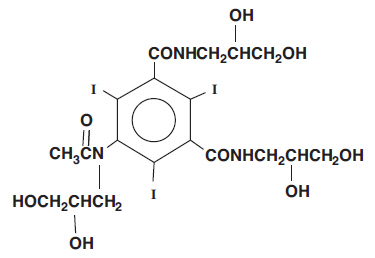
OMNIPAQUE (iohexol) is a nonionic, radiographic contrast agent for intravenous use. OMNIPAQUE is provided as a sterile, pyrogen-free, colorless to pale-yellow solution. The chemical name of iohexol is Bis(2,3-dihydroxypropyl)-5-[ N-(2,3-dihydroxypropyl)-acetamido]-2,4,6- triiodoisophthalamide with a molecular weight of 821.14 (iodine content 46.36%). Iohexol has the following structural formula:
- OMNIPAQUE 300 mg iodine/mL (647 mg of iohexol/mL): Each mL contains 300 mg organically bound iodine, 1.21 mg tromethamine, 0.1 mg edetate calcium disodium
- OMNIPAQUE 350 mg iodine/mL (755 mg of iohexol/mL): Each mL contains 350 mg organically bound iodine, 1.21 mg tromethamine, 0.1 mg edetate calcium disodium
The pH is adjusted between 6.8 and 7.7 with hydrochloric acid or sodium hydroxide. All solutions are sterile and contain no preservatives.
11.2 Physical Characteristics
Table 3 summarizes the physical properties of the two concentrations of OMNIPAQUE Imaging Bulk Package.
OMNIPAQUE 300 mg iodine/mL and OMNIPAQUE 350 mg iodine/mL have osmolalities from approximately 2.2 to 3 times those of plasma (285 mOsm/kg water) or cerebrospinal fluid (301 mOsm/kg water) and are hypertonic under conditions of use.
12 CLINICAL PHARMACOLOGY
12.1 Mechanism of Action
Intravascular injection of iohexol opacifies vessels in the path of flow through attenuation of X-rays permitting visualization of the internal structures.
Iohexol diffuses from the vascular into the extravascular space. Vessels feeding tumors are less of a barrier to iohexol diffusion than are normal vessels, resulting in increased accumulation in the extravascular space around tumors and thus contrast enhancement. However, iohexol does not accumulate in normal brain tissue due to the presence of the intact blood-brain barrier. A disruption in the blood-brain barrier allows for the accumulation of contrast agent within the interstitial space in the region of disruption.
12.2 Pharmacodynamics
Following administration of OMNIPAQUE, the degree of contrast enhancement is directly related to the iodine content in an administered dose; peak iodine blood concentrations occur immediately following rapid intravenous injection. The time to maximum contrast enhancement can vary, depending on the organ, from the time that peak blood iodine concentrations are reached to one hour after intravenous bolus administration. When a delay between peak blood iodine concentrations and peak contrast is present, it suggests that radiographic contrast enhancement is at least in part dependent on the accumulation of iodine containing agent within the lesion and outside the blood pool.
Renal accumulation is sufficiently rapid that the period of maximal opacification of the renal collecting system may begin as early as 1 minute after intravenous injection. Urograms become apparent in about 1 to 3 minutes with optimal contrast occurring between 5 to 15 minutes.
12.3 Pharmacokinetics
Following the intravenous administration of iohexol (between 500 mg iodine/kg to 1500 mg iodine/kg) to 16 adult human subjects, apparent first-order terminal elimination half-life was 12.6 hrs and total body clearance was 131 (98 to 165) mL/min. Clearance does not appear to be dose dependent.
Distribution
In 16 adult subjects (receiving between 500 mg iodine/kg to 1500 mg iodine/kg intravenous iohexol) the volume of distribution was 165 (108 to 219) mL/kg.
Elimination
Metabolism
No significant metabolism, deiodination or biotransformation occurs.
Excretion
Following intravascular injection, iohexol is excreted unchanged by glomerular filtration. 90% or more of the injected iohexol dose is excreted within the first 24 hours, with the peak urine concentrations occurring in the first hour after administration.
Specific Populations
Renal Impairment
In patients with renal impairment, greater plasma iohexol exposure may be anticipated due to slowed elimination of iohexol. In these patients, as well as in infants with immature kidneys, fecal excretion of iohexol may occur.
13 NONCLINICAL TOXICOLOGY
13.1 Carcinogenesis, Mutagenesis, Impairment of Fertility
Long-term animal studies have not been performed with iohexol to evaluate carcinogenic potential. Iohexol was not genotoxic by the Ames test, the mouse lymphoma TK locus forward mutation assay, and a mouse micronucleus assay. Iohexol did not impair the fertility of male or female rats when repeatedly administered at intravenous dosages up to 4 g iodine/kg.
14 CLINICAL STUDIES
14.1 Intravenous Administration Studies
OMNIPAQUE Clinical Studies for CT
The safety and efficacy of intravenously administered OMNIPAQUE for CT of the head and body were evaluated in six clinical studies (Table 4). Each study also used an ionic high-osmolar iodinated contrast agent as a comparator (Table 4). Patients were randomized to administration of either OMNIPAQUE or the comparator. OMNIPAQUE patients had a mean age of 53 years (range 16 to 85), were 44% women, had a mean weight of 67 kg (range 36 to 134), and were administered a mean of 572 mg iodine/kg (range 176 to 1250); comparator patients had a mean age of 51 years (range 14 to 80), were 43% women, had a mean weight of 70 kg (range 40 to 136), and were administered a mean of 484 mg iodine/kg (range 135 to 1500). In three studies, efficacy was determined from investigator ratings of quality of contrast enhancement (none, poor, good, or excellent; only scans rated as good or excellent were considered diagnostic); in the remaining three studies, efficacy was assessed quantitatively through X-ray attenuation, measured pre-contrast and at various time points post-contrast.
The percentage of scans rated as good or excellent was 100% for both OMNIPAQUE and the comparator in each of the two studies, and 79% for OMNIPAQUE and 74% for the comparator in the third study. In the studies that measured X-ray attenuation, there were no clinically significant differences between OMNIPAQUE and the comparator regarding contrast over time or time to maximal attenuation.
Overall, the incidence of discomfort (heat, pain, cold, tingling, pressure, chest heaviness, or cramp) was lower in the patients receiving OMNIPAQUE, with 115 (38%) of 300 patients receiving OMNIPAQUE vs. 177 (60%) of 295 comparator patients reporting discomfort ionic media (p<0.001). Similarly, fewer patients receiving OMNIPAQUE than comparator patients reported adverse events (7% versus 19%, respectively, p<0.001).
16 HOW SUPPLIED/STORAGE AND HANDLING
16.1 How Supplied
OMNIPAQUE injection is provided as a sterile, pyrogen-free, preservative free, colorless-to-pale yellow solution available in two strengths in an Imaging Bulk Package. It is supplied in the following configurations:
OMNIPAQUE Imaging Bulk Package (iohexol) Injection 300 mg iodine/mL:
OMNIPAQUE Imaging Bulk Package (iohexol) Injection 350 mg iodine/mL:
16.2 Storage and Handling
Protect OMNIPAQUE Imaging Bulk Package from exposure to sunlight.
Store OMNIPAQUE Imaging Bulk Package at controlled room temperature, 20° to 25°C (68° to 77°F); excursions permitted to 15° to 30°C (59° to 86°F) [see USP Controlled Room Temperature]. OMNIPAQUE Imaging Bulk Package may be stored in a contrast media warmer for up to one month at 37°C (98.6°F).
Do not freeze. Discard any product that is inadvertently frozen, as freezing may compromise the closure integrity of the immediate container.
17 PATIENT COUNSELING INFORMATION
Hypersensitivity Reactions
Advise the patient concerning the risk of hypersensitivity reactions that can occur both during and after OMNIPAQUE administration. Advise the patient to report any signs or symptoms of hypersensitivity reactions during the procedure and to seek immediate medical attention for any signs or symptoms experienced after discharge [see Warnings and Precautions (5.2)].
Advise patients to inform their physician if they develop a rash after receiving OMNIPAQUE [see Warnings and Precautions (5.10))].
Contrast-Induced Acute Kidney Injury
Advise the patient concerning appropriate hydration to decrease the risk of contrast induced acute kidney injury [see Warnings and Precautions (5.3)].
Extravasation
If extravasation occurs during injection, advise patients to seek medical care for progression of symptoms [see Warnings and Precautions (5.5)].
Lactation
Advise a lactating woman that interruption of breastfeeding is not necessary, however, to avoid any exposure a lactating woman may consider pumping and discarding breast milk for 10 hours after OMNIPAQUE administration [see Use in Specific Populations (8.2)].
Thyroid Dysfunction
Advise parents/caregivers about the risk of developing thyroid dysfunction after OMNIPAQUE administration. Advise parents/caregivers about when to seek medical care for their child to monitor for thyroid function [see Warnings and Precautions (5.7)] .
Distributed by GE Healthcare Inc., Marlborough, MA 01752 U.S.A.
Product of Norwegian Origin.
OMNIPAQUE is a trademark of GE HealthCare or one of its subsidiaries.
GE is a trademark of General Electric Company used under trademark license.
NOVAPLUS is a registered trademark of Vizient, Inc.
© 2023 GE HealthCare
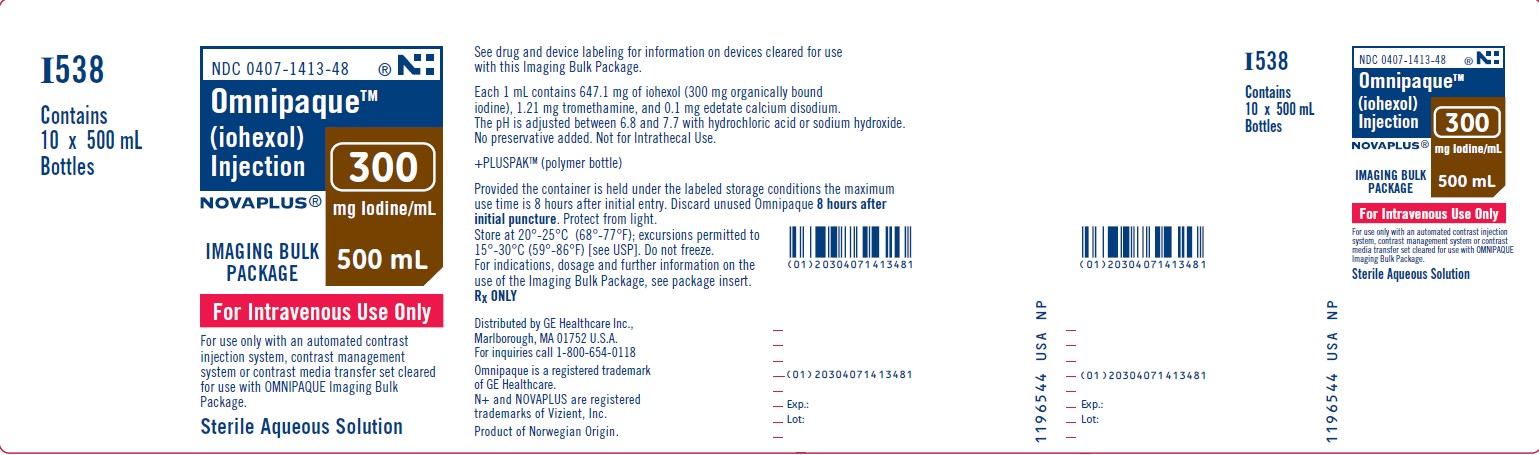
PRINCIPAL DISPLAY PANEL - 300 mL Bottle Box Label
I538
Contains
10 x 500 mL
Bottles
NDC 0407-1413-48
Omnipaque™
(iohexol)
Injection
300
mg Iodine/mL
500 mL
NOVAPLUS ®
IMAGING BULK
PACKAGE
For Intravenous Use Only
For use only with an automated contrast
injection system, contrast management
system or contrast media transfer set cleared
for use with OMNIPAQUE Imaging Bulk
Package.
Sterile Aqueous Solution
See drug and device labeling for information on devices cleared for use
with this Imaging Bulk Package.
Each 1 mL contains 647.1 mg of iohexol (300 mg organically bound
iodine), 1.21 mg tromethamine, and 0.1 mg edetate calcium disodium.
The pH is adjusted between 6.8 and 7.7 with hydrochloric acid
or sodium hydroxide. No preservative added. Not for Intrathecal Use.
+PLUSPAK™ (polymer bottle)
Provided the container is held under the labeled storage conditions
the maximum use time is 8 hours after initial entry. Discard unused
Omnipaque 8 hours after initial puncture. Protect from light.
Store at 20°-25°C (68°-77°F); excursions permitted to
15°-30°C (59°-86°F) [see USP]. Do not freeze.
For indications, dosage and further information on the
use of the Imaging Bulk Package, see package insert.
R
x ONLY
Distributed by GE Healthcare Inc.
Marlborough, MA 01752 U.S.A.
For inquiries call (800) 654-0118.
Omnipaque is a registered trademark of GE Healthcare.
N+ and NOVAPLUS are registered trademarks of
Vizient, Inc.
Product of Norwegian Origin.
(01)20304071413481
Exp.:
Lot:
Qty.: 1
1196544 USA NP
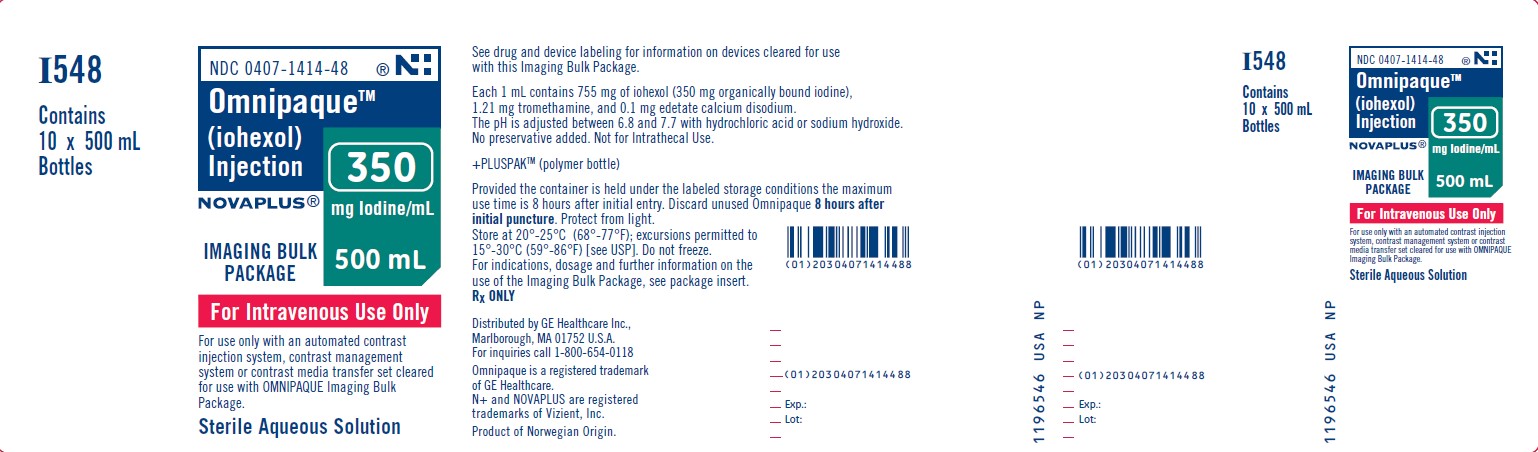
PRINCIPAL DISPLAY PANEL - 350 mL Bottle Box Label
I548
Contains
10 x 500 mL
Bottles
NDC 0407-1414-48
Omnipaque™
(iohexol)
Injection
350
mg Iodine/mL
500 mL
NOVAPLUS ®
IMAGING BULK
PACKAGE
For Intravenous Use Only
For use only with an automated contrast
injection system, contrast management
system or contrast media transfer set cleared
for use with OMNIPAQUE Imaging Bulk
Package.
Sterile Aqueous Solution
See drug and device labeling for information on devices cleared for use
with this Imaging Bulk Package.
Each 1 mL contains 755 mg of iohexol (350 mg organically bound iodine),
1.21 mg tromethamine, and 0.1 mg edetate calcium disodium.
The pH is adjusted between 6.8 and 7.7 with hydrochloric acid
or sodium hydroxide. No preservative added. Not for Intrathecal Use.
+PLUSPAK™ (polymer bottle)
Provided the container is held under the labeled storage conditions the
maximum use time is 8 hours after initial entry. Discard unused
Omnipaque 8 hours after initial puncture. Protect from light.
Store at 20°-25°C (68°-77°F); excursions permitted to
15°-30°C (59°-86°F) [see USP]. Do not freeze.
For indications, dosage and further information on the
use of the Imaging Bulk Package, see package insert.
R
x ONLY
Distributed by GE Healthcare Inc.
Marlborough, MA 01752 U.S.A.
For inquiries call (800) 654-0118
Omnipaque is a registered trademark of GE Healthcare.
N+ and NOVAPLUS are registered trademarks of
Vizient, Inc.
Product of Norwegian Origin.
(01)20304071414488
Exp.:
Lot:
Qty.: 1
1196546 USA NP
Guideline Central and select third party use “cookies” on this website to enhance the user experience.
This technology helps us gather statistical and analytical information to optimize the relevant content for you.
The user also has the option to opt-out which may have an effect on the browsing experience.