Key Points
- The population of infants and children requiring tracheostomies has grown rapidly over the past two decades due to medical advances and evolving patient and family preferences.
- The rates of in-hospital mortality and tracheostomy-related complications in the two years following tracheostomy placement are 9% and 38.8%, respectively.
- This guideline aims to standardize best practice, improve clinical outcomes, and identify disparities that contribute to inequitable healthcare for this high-risk population.
Treatment
Recommendation 1
We recommend applying ethical principles (beneficence, nonmaleficence, autonomy, and justice) to guide shared decision-making about tracheostomy placement. ( Very low, Strong Recommendation )
Recommendation 2
We suggest implementing a standardized discharge process to facilitate the safe transition of tracheostomy-dependent children from hospital-to-home. ( Low, Conditional Recommendation )
Recommendation 3
We recommend that an awake and alert trained caregiver always be present with children at risk of immediate decompensation due to tracheostomy-related complications. ( Very low, Strong Recommendation )
Recommendation 4a
In well children with tracheostomy tubes, we suggest against routine surveillance of tracheal aspirates for bacterial growth. ( Low, Conditional Recommendation )
Recommendation 4b
In children with tracheostomy tubes and concerns for lower respiratory tract infection, we suggest culturing tracheal aspirate when needed to guide management. ( Low, Conditional Recommendation )
Recommendation 4c
In children with tracheostomy tubes who were recently treated with antibiotics and are clinically improving, we suggest against “test of cure” tracheal aspirates. ( Low, Conditional Recommendation )
Recommendation 5a
For children with tracheostomies, we suggest performing an endoscopic airway evaluation in those with a change in symptoms, or with persistent symptoms unresponsive to medical management. ( Low, Conditional Recommendation )
Recommendation 5b
For children with tracheostomies, we recommend performing a complete airway evaluation prior to a decannulation attempt. Airway evaluation should include an assessment of a) nose and nasopharynx, b) oropharynx and oral cavity, c) supraglottis and larynx, and d) subglottis, trachea and bronchi. ( Low, Strong Recommendation )
Recommendation 6a
We suggest that, in addition to a formal airway evaluation, either a polysomnogram or pulse oximetry study (with or without capnography) under direct observation with a capped tracheostomy (or occluded stoma) be performed as part of the evaluation for decannulation readiness. ( Low, Conditional Recommendation )
Recommendation 6b
We suggest polysomnography with a capped tracheostomy (or occluded stoma) in the following situations: a) assessing transition readiness from invasive to non-invasive ventilation, b) unclear cause of failed capping trials, c) for patients with medical and/or airway complexity. ( Low, Conditional Recommendation )
Figure 1. Clinical and Diagnostic Evaluations Recommended Prior to Tracheostomy Decannulation
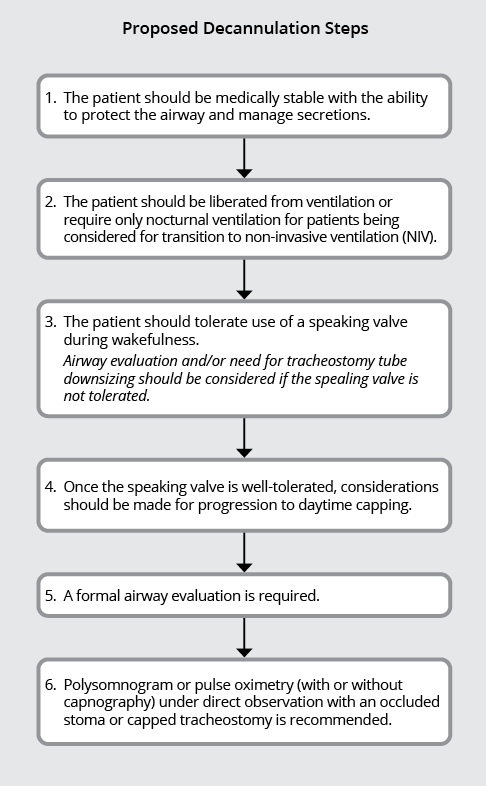
Table 1. Recommendations for Developing a Standardized Process for the Initial Discharge from the Hospital for Infants and Children With Tracheostomies
Table 2. Areas for Future Research
Grading of Recommendations, Assessment, Development, and Evaluation (GRADE)-Based Recommendations
Certainty of Evidence
Implications of Clinical Guideline Recommendations by Stakeholder
Abbreviations
- NIV
- non-invasive ventilation
Source Citation
Amin R, Agarwal A, Chiang J, et al. Care of Infants and Children with Tracheostomies. An Official American Thoracic Society Clinical Practice Guideline. Am J Respir Crit Care Med. Published online October 22, 2025. doi:10.1164/rccm.202508-2055ST
Expert Authors/Reviewers
CONSULTANTS
Reshma Amin, MD, MSc | Amit Agarwal, MD | Jackie Chiang, MD | Joseph M. Collaco, MD | A. Ioana Cristea, MD | Evan J. Propst, MD | Sarah A. Sobotka, MD, MSCP | Karthik Balakrishnan, MD, MPH | Dan Benscoter, DO | Michael J. Brenner, MD | Maria L. Castro-Codesal, MD, PhD | Milenka Cuevas Guaman, MD | Cori L. Daines, MD | Jessica A. Dawson, RN | Jeffrey D. Edwards, MD, MA, MAS | Robert J. Graham, MD | Jennifer K. Henningfeld, MD | Nadia E. Hoekstra, MD | Arwen J. Jackson, SLP | Romaine F. Johnson, MD | Karen Kam, MD | Sheila Kun, RN | Natalie Napolitano, PhD, RRT-NPS | Alvaro Pacheco, MD | Howard B. Panitch, MD | Jeremy D. Prager, MD, MBA | Jenny Y. Shi, MD | Marlene Soma MBBS, FRACS | Aaron St-Laurent, MD | Faiza Syed, RRT | Karen F. Watters, MB, BCh, BAO, MPH | David Zielinski, MD | An Thi Nhat Ho, MD | Ravi Kanth Velagapudi, MD | Fatima Zeba, MD | Shandra Lee Knight, MS | Narayan Iyer, MD | Christopher D. Baker, MD
Disclaimer
This Guideline attempts to define principles of practice that should produce high-quality patient care. It is applicable to specialists, primary care, and providers at all levels. This Guideline should not be considered exclusive of other methods of care reasonably directed at obtaining the same results. The ultimate judgment concerning the propriety of any course of conduct must be made by the clinician after consideration of each individual patient situation. Neither IGC, the American Thoracic Society, nor the authors endorse any product or service associated with the distributor of this clinical reference tool.