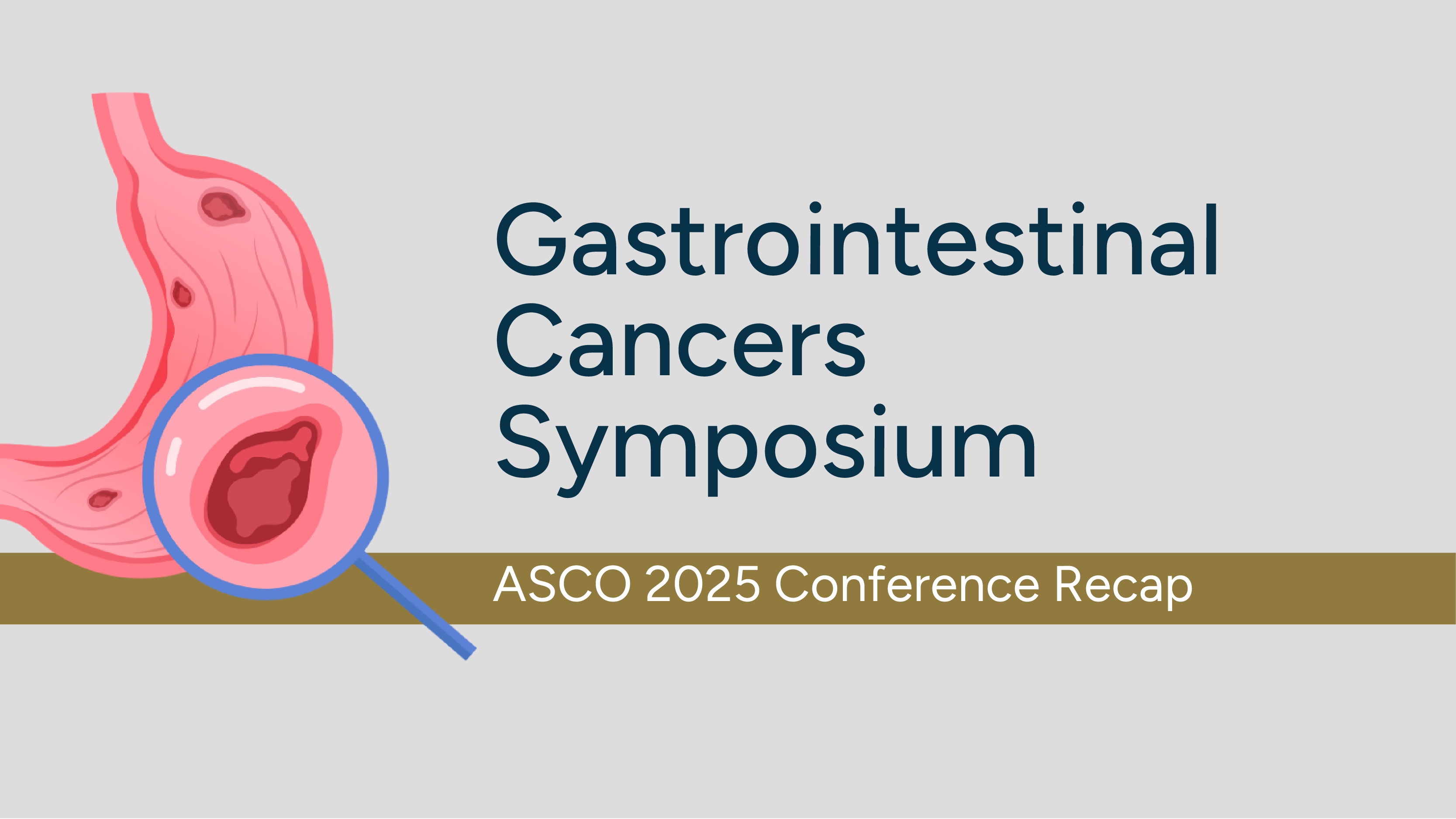
The 2025 American Society of Clinical Oncology (ASCO) Gastrointestinal (GI) Cancers Symposium was held January 23- 25, 2025, at Moscone West in San Francisco, CA. This symposium serves as an important platform for staying abreast of the most recent advancements in research and gaining insights from leading experts on the management and treatment of intricate patient cases.
Outlined below are brief summaries of studies presented at the 2025 ASCO GI Symposium that specifically focus on pancreatic cancer research.
A systematic review of the impact of artificial intelligence in pancreatic cancer detection
- Pancreatic cancer stands as the fourth leading cause of cancer-related deaths in the United States, presenting a formidable challenge in terms of early detection. While screening the general population proves impractical, the emergence of artificial intelligence (AI) has opened up new avenues for enhancing early diagnosis and ultimately improving patient outcomes.
- Current approaches to early pancreatic cancer diagnosis primarily revolve around serum biomarkers and EUS-guided Fine Needle Aspiration (EUS-FNA), with varying levels of sensitivity contingent upon the expertise of the attending physician. AI, however, shows great promise in revolutionizing pancreatic cancer diagnosis by bolstering early detection capabilities and enhancing diagnostic accuracy. Through the utilization of cutting-edge techniques such as deep learning, NLP-based models, Faster R-CNN, and CAD systems, AI can analyze medical data and images with a level of efficiency and precision that surpasses traditional manual methods.
Dose-escalated radiation for locally advanced unresectable pancreatic cancer
- This study aims to retrospectively analyze the long-term outcomes of patients who have undergone dose escalated radiation for unresectable localized pancreatic cancer. With the evolution of systemic chemotherapy, more patients are now living with persistent pancreatic disease after initial treatment. Definitive dose escalated radiation has emerged as a promising solution to provide effective local control in these cases.
- The results of this study show that dose escalated radiation is well-tolerated, with manageable side effects and successful long-lasting local control. While patients may still experience distant disease failure, the rates are lower compared to traditional treatments. This innovative approach offers hope for patients with unresectable locally advanced pancreatic cancer, providing a new avenue for improved outcomes.
Mortality and other outcomes of hospitalizations due to pancreatic cancer
- Pancreatic cancer remains a devastating malignancy of the digestive system, posing a significant financial burden on healthcare systems worldwide. While often diagnosed incidentally, various risk factors such as smoking, family history, age, race, gender, and alcohol consumption have been identified. The objective of this study was to investigate the inpatient outcomes and healthcare costs associated with hospitalized patients suffering from pancreatic cancer.
- Although certain risk factors that contribute to mortality are beyond our control, thrombosis has emerged as a significant factor not only in increasing mortality rates but also in escalating healthcare expenses and prolonging hospital stays. Fortunately, the implementation of anticoagulation therapy may offer a preventive measure against thrombosis, potentially alleviating some of the burdens associated with this disease.
- The primary goal of treatment regimens for patients with pancreatic ductal adenocarcinoma (PDAC) is to prolong survival, manage symptoms, and enhance quality of life (QoL). In this study, we present findings from interviews with patients (PT), caregivers (CG), and oncologists (OC) regarding their preferences for PDAC treatment.
- Participants in the study consistently ranked overall survival (OS) and QoL as equally important, indicating that simply extending survival is not sufficient without maintaining an acceptable QoL. All participants expressed a strong desire to avoid treatment-related side effects, although the specific risks associated with treatment were prioritized differently by PTs, CGs, and OCs.
- Further research is necessary to better understand the balance between treatment efficacy and side effects in the management of advanced PDAC patients. This will help healthcare providers make more informed decisions when developing individualized treatment plans for patients with PDAC.
Disparities in outcomes of pancreatic cancer hospitalizations: A ten-year trend study
- Pancreatic cancer stands as the third leading cause of cancer-related deaths in the United States, with an estimated 51,750 individuals succumbing to the disease in 2024. Research has shown that there are demographic variations in the incidence and outcomes of pancreatic cancer. Our objective was to pinpoint trends in demographic-specific disparities in inpatient pancreatic cancer outcomes.
- This analysis revealed an overall improvement in the mortality rates of individuals hospitalized for pancreatic cancer. However, upon further examination, it became evident that this improvement was primarily observed in elderly, male, and Caucasian patient populations. The disparities in outcomes among different demographic groups highlight the need for targeted research to uncover the underlying causes and to develop effective interventions to bridge this gap.
- Metastatic pancreatic carcinoma presents a significant challenge in the realm of cancer treatment. Conventional methods like chemotherapy and radiation therapy have proven to be only marginally effective in combating this aggressive form of cancer. In light of this, the focus of this meta-analysis is to explore the potential of immunotherapy as a viable treatment option for metastatic pancreatic carcinoma.
- The findings of this meta-analysis reveal that emerging immunotherapies show great promise in the treatment of metastatic pancreatic cancer. Moving forward, it is imperative that further clinical trials be conducted to build upon the encouraging results observed in early-phase studies. This will allow for a more comprehensive understanding of the efficacy of immunotherapy in the management of this challenging malignancy.
- Recent reports have indicated the presence of BRCA1/2-mutated patients in biliary tract, pancreatic, and other gastrointestinal cancers. Niraparib, a poly(ADP-ribose) polymerase (PARP) inhibitor, has shown promise in targeting cancer cells with homologous recombination deficiency, particularly those with BRCA mutations.
- While niraparib demonstrated some clinical activity in patients with BRCA-mutated biliary tract and pancreatic cancers, it did not meet the primary statistical endpoint. However, no new safety concerns were identified. Exploring alternative strategies, such as selecting patients based on specific biomarkers or combining niraparib with other agents, may enhance its clinical efficacy in this particular setting.
- Immunotherapy has emerged as a promising avenue in cancer treatment, yet its effectiveness on pancreatic ductal adenocarcinoma (PDAC) is hindered by the lack of effector T cells in the tumor microenvironment. One strategy to overcome this resistance involves identifying immunogenic tumor-associated and specific antigens for the development of personalized cancer vaccines. The mRNA platform has become an attractive option for antigen presentation, with the delivery of mRNA cancer vaccines via lipid nanoparticles (LNPs) enabling intracellular delivery and controlled release of the payload, ultimately improving vaccine efficacy. However, mRNA vaccines presenting human T cell epitopes often lack a preclinical model for antitumor immune efficacy testing.
- To test the antitumor efficacy of our mRNA vaccine, we can utilize the syngeneic mouse hemispleen model of KPC tumors. The mouse LYPFPLAL epitope-specific CD8+ T cell response can serve as a surrogate marker for the antitumor efficacy of this mRNA vaccine in mouse models for PDAC. This model allows for a comprehensive evaluation of the vaccine's effectiveness in inducing a targeted immune response against PDAC, providing valuable insights for potential clinical applications.
Thank you for joining us for this recap of the 2025 ASCO GI Cancers Symposium. We recommend visiting this link to explore all the posters presented at the event.
Sign up for alerts and stay informed on the latest published guidelines and stay tuned for our conference recaps.
Copyright © 2025 Guideline Central, All Rights Reserved.