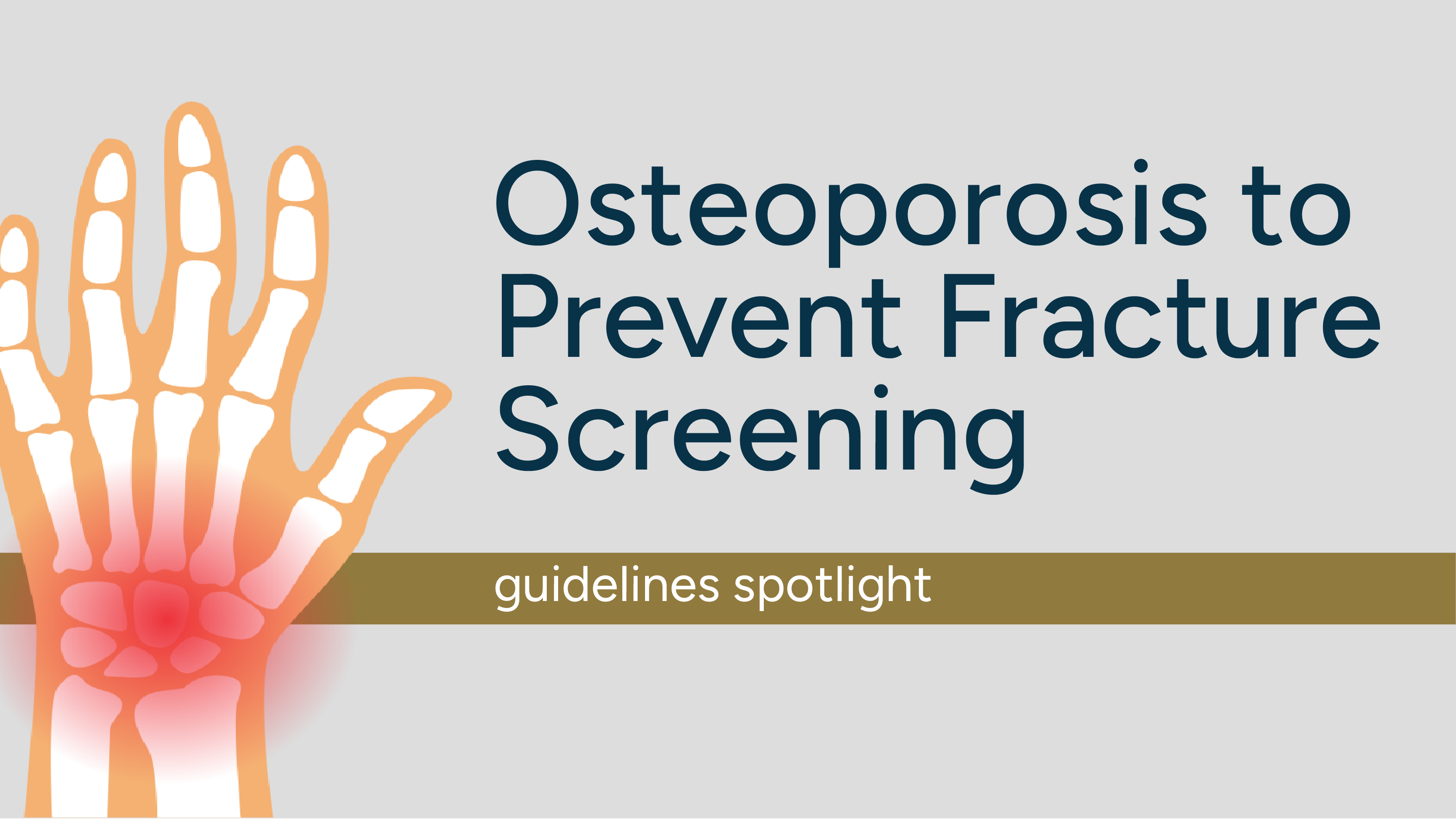
The US Preventive Services Task Force (USPSTF) has recently released updated guidelines for the prevention of osteoporosis-related fractures. The updated guideline for women is consistent with earlier versions issued in 2018 and 2011. The USPSTF regularly reviews each of its screening guidelines, to make sure that they adhere to the most recent findings from medical science.
The guideline emphasizes the importance of screening, as osteoporotic fractures can lead to severe consequences such as psychological distress, subsequent fractures, loss of independence, and reduced ability to perform daily activities. Research shows that only 40% to 60% of individuals who experience a hip fracture are able to regain their pre-fracture level of mobility and independence. Additionally, the prevalence of osteoporosis is significantly higher among individuals aged 65 years or older, affecting 27.1% of women and 5.7% of men. These statistics underscore the necessity of early detection and intervention to prevent osteoporosis-related fractures.
In this discussion, we will explore the key takeaways regarding the guideline's recommendations. Please be aware that this list does not cover all major points. For a comprehensive list of recommendations, please refer to the full text guideline here.
Key Takeaways
The USPSTF recommends:
- Universal screening for osteoporosis to prevent osteoporotic fractures in women 65 years or older.(Grade B)
- Screening for osteoporosis to prevent osteoporotic fractures in postmenopausal women younger than 65 years who are at increased risk for an osteoporotic fracture as estimated by clinical risk assessment. (Grade B)
The USPSTF has determined that there is currently insufficient evidence to evaluate the benefits and risks of screening for osteoporosis in men.
Key Differences:
The latest guideline does differ from previous versions in a significant way. In 2018, the USPSTF recommended screening for osteoporosis through bone measurement testing to prevent fractures in women aged 65 years or older, as well as in postmenopausal women under 65 who are at higher risk for osteoporosis based on clinical risk assessment. The current recommendation now permits screening using dual-energy x-ray absorptiometry (DXA) to measure bone mineral density (BMD).
Conclusion:
The USPSTF offers recommendations on the efficacy of preventive care services for asymptomatic patients to enhance the overall health of the population. This revised guideline equips healthcare providers with a concise and efficient method for identifying individuals who could benefit from osteoporosis screening, thereby enhancing patient outcomes and the quality of care provided. For additional information, we have included links to recent guidelines on osteoporosis screening from other organizations below:
- Prevention and Treatment of Glucocorticoid‐Induced Osteoporosis
- American College of Rheumatology
- Publication: October 16, 2023
- Osteoporosis Prevention, Screening, and Diagnosis
- American College of Obstetricians and Gynecologists
- Publication: August 31, 2021
- Diagnosis and Treatment of Postmenopausal Osteoporosis
- American Association of Clinical Endocrinologists
- Publication: March 02, 2020
We greatly appreciate your review of our Guidelines Spotlight. Your thoughts and feedback are invaluable to us as we endeavor to provide informative and insightful content in our future spotlights. Thank you for being a valued member of our community!
Sign up for alerts and stay informed on the latest published guidelines and articles.
Copyright © 2025 Guideline Central, all rights reserved.